Uneven slip resistance, particle settling, clogged spray equipment, and an unstable coating surface are common problems when using 1mm Composite Elastic Friction Particles. The correct starting dose depends on the binder, application method, target slip resistance, film thickness, and particle density. This guide explains how to mix 1mm Composite Elastic Friction Particles, select an anti-slip coating friction particle application method, and control particle distribution through measurable tests. The goal is not to use the highest possible loading, but to achieve the required surface profile without damaging flow, adhesion, or pot life.
For reliable production, treat the dosage as a controlled formulation variable. Record the mass fraction, wet film thickness, dry film thickness, mixing time, and test result for every trial. Product information from ShuoRuo or another supplier should always be checked before production because the resin compatibility, bulk density, surface treatment, and particle hardness can vary between grades.
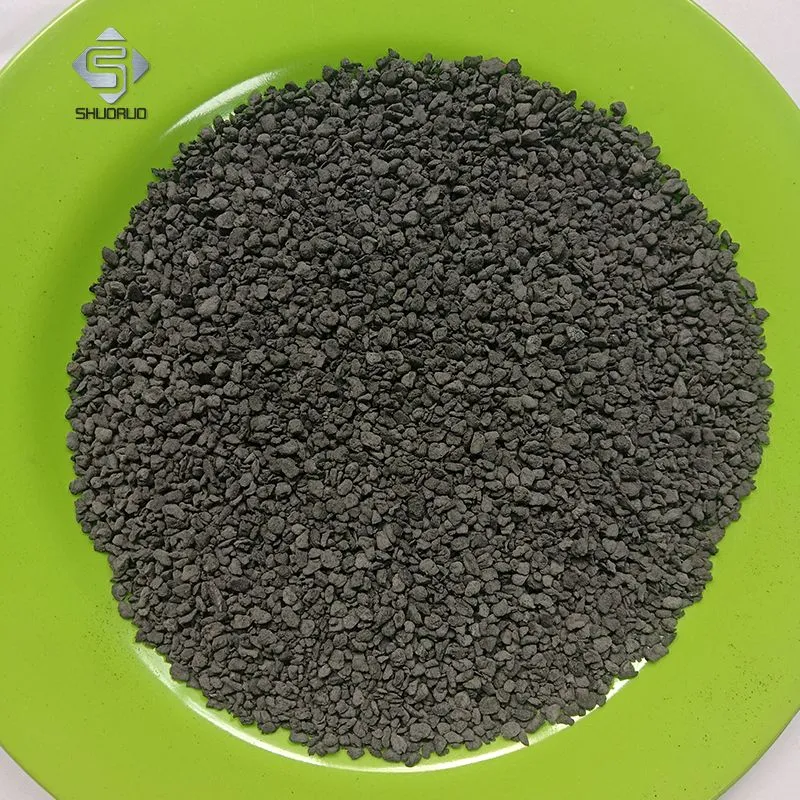
A 1mm particle size does not define a universal dosage. It describes the nominal particle dimension, while the practical dose is influenced by several additional factors:
The most useful formulation terms are mass fraction, which describes particle mass relative to the total mixture, sieve analysis, which measures particle size distribution, and pot life, which indicates how long the mixed material remains usable. These terms provide more reliable control than descriptions such as high friction or easy to use.
Why: A staged test identifies the lowest loading that reaches the required slip result while preserving coating flow and adhesion.
Start with a small laboratory or field panel rather than a full floor. A practical screening range is 4 percent, 6 percent, 8 percent, and 10 percent particle mass relative to the combined wet coating system, unless the supplier technical data sheet specifies another range. These values are test points, not universal recommendations.
For example, if the planned wet coating batch weighs 20 kg, the particle amounts for four screening levels are:
Use a calibrated scale with a resolution suitable for the batch size. Weigh the resin, hardener, additives, and particles separately. Do not estimate the dose by volume unless bulk density has been measured, because elastic particles may contain voids and can occupy a different volume than mineral aggregate.
Prepare test panels using the same substrate preparation, primer, mixing equipment, wet film thickness, and curing conditions expected at the job site. After curing, compare particle coverage, exposed particle height, adhesion, surface appearance, and slip resistance. Select the lowest test dose that passes the project requirement with a reasonable safety margin.
This method is suitable for first-time users, new binder systems, customized ShuoRuo particle grades, and projects where the required friction level is specified by a test standard. It is especially important when changing from a mineral friction aggregate to an elastic composite particle because the same mass percentage may produce a different surface profile.
Why: Premixing and broadcasting place particles in different locations, so the same nominal dosage will not produce the same surface texture.
Premixing is useful when the project needs a relatively consistent particle distribution through the coating layer. It can work well on textured floors, ramps, walkways, and equipment platforms where a uniform appearance is important.
High-speed mixing is not automatically better. Excessive shear can introduce air, increase heat, damage fragile particles, or shorten the usable working time. A slow-speed paddle that creates circulation without a deep vortex is generally easier to control. The exact mixer speed should be confirmed through a trial because motor size and vessel geometry affect shear.
Broadcasting is useful when a higher exposed-particle profile is required on ramps, wet service areas, or heavy-use walkways. Apply the wet binder first, then distribute the particles at a controlled rate before the binder skins over. After curing, remove loose particles and apply any specified seal coat.
Broadcasting should be measured in kilograms per square meter rather than described as a heavy application. For example, test panels may use 0.50 kg per square meter, 0.75 kg per square meter, and 1.00 kg per square meter. The correct level depends on the wet film thickness, binder coverage, particle bulk density, and required exposure. A production rate must be confirmed by weighing the material before and after a known test area.
Premixing is usually more suitable for users who need uniform color and distribution. Broadcasting is usually more suitable for users who need a more pronounced surface profile. A dual-layer method can combine a particle-filled base coat with a controlled broadcast and seal coat, but it requires compatibility testing between layers.
Why: A 1mm particle needs adequate binder support, while an excessively thick or thin film can reduce adhesion, leveling, or friction consistency.
Measure wet film thickness with a wet film comb immediately after application. Record at least five readings across each test panel and calculate the average. Also record the highest and lowest readings because local variation can cause visible particle clusters and inconsistent friction.
Do not assume that a 1mm particle requires exactly a 1mm coating thickness. The correct relationship depends on whether the particle is embedded, partially exposed, or fully exposed. The supplier should provide a recommended film build or cross-section guidance. If that information is unavailable, prepare cross-section samples at several film thicknesses and examine particle anchoring after cure.
A useful evaluation sequence is:
Adding more particles to compensate for a thin film can make the problem worse. If the binder cannot wet and anchor the particles, the result may be loose aggregate, weak intercoat adhesion, and early surface loss. Adjust the film build or binder viscosity before increasing the particle dose.
Why: Uniform distribution reduces local slippery spots, rough clusters, blocked equipment, and variation in measured friction.
First, check whether the particles float, settle, or remain suspended in the selected binder. This can be done with a small clear-container test. Mix a representative sample, leave it undisturbed for 5, 10, and 20 minutes, and record any visible separation. The test does not replace a production trial, but it shows whether the formulation needs a rheology adjustment or more frequent agitation.
Use the following operating controls:
For large projects, divide the formulation into repeatable batch sizes. For example, if one 20 kg batch gives the most stable distribution, do not switch to a 100 kg batch without checking mixer capacity, temperature rise, and settling behavior. Record the batch number, mixing duration, particle mass, and application start time.
A lower test dose is more appropriate when the coating must retain smooth flow, the area is mostly dry, the application equipment is sensitive to solids, or a light texture is required. A higher test dose may be appropriate when the area is frequently wet, the surface needs a deeper texture, or the project specification requires a higher slip-resistance result.
Do not increase the dose solely because the coating looks less rough during the wet stage. Elastic particles can become more exposed as the binder levels and cures. Evaluate the cured surface and test it under the actual service condition.
Why: Visual roughness does not prove slip resistance, and a coating that
A: Key factors include the binder type, application method, target slip resistance, film thickness, and particle bulk density. Each of these elements can significantly influence the effective dosage necessary for optimal performance.
A: To achieve uniform distribution, gradually add particles to the binder while mixing at low speeds. Maintain gentle agitation throughout the process and avoid adding any solvents unless approved by the coating manufacturer.
A: For a consistent particle distribution, premixing is advisable, especially for textured surfaces. Broadcasting is effective for achieving a higher exposed-particle profile, such as on ramps or walkways. Choose based on your specific performance requirements.
A: Conduct performance testing by evaluating slip resistance, adhesion, and surface appearance after curing. Use methods such as tape pull testing or visual examination to ensure the coating meets project specifications.
A: A short pot life can hinder the uniform leveling of the coating and may cause particles to settle before the binder flows adequately. Adjusting the particle dosage or binder viscosity may be necessary to ensure optimal results.


