
When producers search for 4mm Composite Elastic Friction Particles in asphalt mixing, they usually want to solve three practical problems: uneven dispersion, excessive mixer load, and surface friction that does not match the design target. The key questions are how to mix 4mm elastic friction particles, how to calculate the correct 4mm friction particle dosage, and how to maintain stable particle dispersion without damaging the elastic granules. In production, the result depends on binder wetting, aggregate gradation, mixing temperature, shear rate, mixer torque, and final air voids.
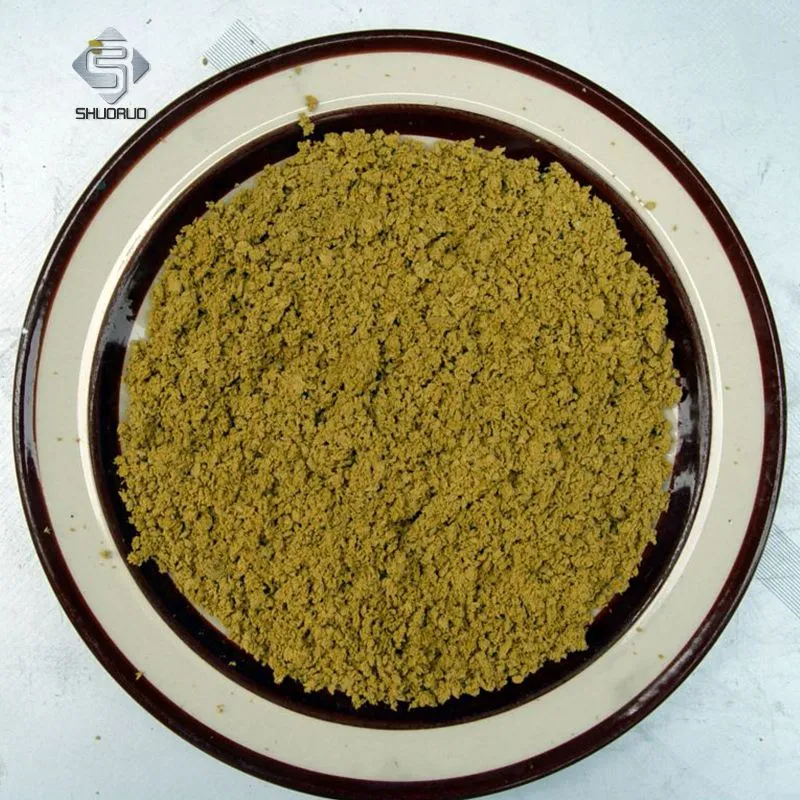
4mm composite elastic friction particles are engineered granular materials with a nominal particle size of approximately 4 mm. Depending on the product, the granules may contain rubber, elastomer, mineral filler, resin, ceramic material, recycled polymer, or a combination of these components.
They are commonly introduced into friction-enhancing asphalt mixtures, resin-bound surfaces, industrial flooring, wear-resistant compounds, and other systems where the finished surface needs a controlled balance between elasticity and friction. The exact formulation is product-specific, so the supplier’s technical data sheet should be treated as the primary reference for density, softening behavior, oil absorption, temperature resistance, and recommended dosage.
The 4mm size matters because it is large enough to influence the mixture’s grading curve but small enough to be distributed through a conventional industrial mixer. It should not be treated like a fine powder. A 4mm granule has a much lower specific surface area than a fine filler, so it generally requires a different wetting time and may need preheating or staged addition.
What Are 4mm Composite Elastic Friction Particles?
How 4mm Composite Elastic Friction Particles Change the Mixing Process
Adding 4mm particles changes the balance between coarse aggregate, fine aggregate, filler, and binder. If the original mix is already close to its upper coarse-size limit, an excessive particle dosage can reduce packing efficiency and increase interconnected voids.
A simple mass-based dosage calculation is:
Particle dosage (%) = particle mass ÷ total dry aggregate mass × 100
For example, if a laboratory batch contains 20 kg of dry aggregate and the target dosage is 2%, the required particle mass is:
20 kg × 2% = 0.40 kg
This calculation is only a starting point. Because elastic particles may have a lower or higher density than mineral aggregate, producers should also compare the volumetric effect. Two materials with the same mass percentage can occupy different volumes and create different void structures.
4mm Composite Elastic Friction Particles and Aggregate Gradation
Binder wetting is often the first mixing limitation. A 4mm granule has a relatively low surface-area-to-volume ratio compared with powder, but its surface may be rough, porous, hydrophobic, or chemically different from the binder. If the binder does not coat the particles uniformly, the mixture may show dry pockets, visible clusters, or particles that are pushed out during compaction.
For asphalt-based systems, the practical objective is not to dissolve the elastic particle. It is to distribute the granules and create sufficient interfacial contact with the asphalt film. Excessive temperature can soften, deform, oxidize, or volatilize some polymeric components, while insufficient temperature can increase viscosity and prevent coating.
For resin-based systems, the main concern is pot life. Adding the particles too early may increase viscosity before the operator has enough time to place or compact the material. Adding them too late may produce incomplete wetting. The correct sequence depends on resin viscosity, catalyst reaction time, and particle surface treatment.
4mm Composite Elastic Friction Particles and Binder Wetting
Elastic granules can increase mixer torque because they deform between the blades and resist movement differently from rigid mineral aggregate. A torque increase does not automatically indicate a problem. A gradual increase followed by stabilization usually suggests that the material is being incorporated. A sharp increase, repeated torque spikes, or visible blade slippage indicates poor sequencing, excessive dosage, low temperature, or particle agglomeration.
Record the mixer’s baseline torque with the standard formulation, then compare it with the modified formulation. A useful plant-control method is to define an internal alarm limit, such as a 15% to 20% torque increase above the established baseline, but the appropriate limit must be confirmed for the specific mixer and motor capacity.
4mm Composite Elastic Friction Particles and Mixer Load
Mixing time should be determined by dispersion quality rather than by a fixed number of seconds. A practical laboratory sequence may require 30 to 90 seconds of dry blending, followed by 60 to 180 seconds after binder addition. These figures are starting ranges, not universal specifications.
Longer mixing is not always better. High shear and prolonged residence time may break down soft particles, raise material temperature, reduce workability, or accelerate binder aging. The correct endpoint is a visually uniform mixture with no dry aggregate pockets, no concentrated particle bands, and no significant change in torque during the final mixing interval.
4mm Composite Elastic Friction Particles and Mixing Time
Preparation Before Mixing 4mm Composite Elastic Friction Particles
- 4mm composite elastic friction particles from a batch with a documented particle-size distribution.
- Compatible asphalt, resin, polymer binder, or other specified matrix material.
- Coarse aggregate, fine aggregate, and mineral filler according to the approved mix design.
- A moisture-control sample of each dry material.
- Clean containers for weighing and collecting samples.
- Optional adhesion promoter or surface treatment recommended by the particle supplier.
Materials Required for 4mm Composite Elastic Friction Particle Mixing
- Calibrated weighing scale with an accuracy suitable for the batch size.
- Laboratory or plant mixer with adjustable speed.
- Temperature probe or infrared thermometer.
- Torque or power-consumption monitoring system, if available.
- Moisture analyzer or oven-drying equipment.
- Metal sampling tray, spatula, and clean sample bags.
- Compaction equipment appropriate for the final application.
- Personal protective equipment, including heat-resistant gloves, eye protection, safety shoes, and respiratory protection where required.
Tools for 4mm Composite Elastic Friction Particle Mixing
- Check the product specification. Confirm nominal size, density, recommended dosage, maximum processing temperature, moisture limit, and compatibility notes.
- Inspect the granules. Remove foreign material, excessive dust, fused lumps, or particles that are visibly outside the specified size range.
- Measure moisture. Moisture can create steam, reduce binder adhesion, and produce clumps. Use the supplier’s limit; if no limit is stated, establish one through a laboratory trial rather than guessing.
- Confirm equipment cleanliness. Hardened binder left on the blades can create false agglomerates and interfere with torque readings.
- Prepare a control batch. Mix the original formulation without elastic particles. Record temperature, mixing time, torque, appearance, density, and compaction behavior.
Pre-Mixing Checks for 4mm Composite Elastic Friction Particles
Step-by-Step Guide to Mixing 4mm Composite Elastic Friction Particles
Step 1: Establish the 4mm Composite Elastic Friction Particle Dosage
Begin with a small dosage matrix instead of changing directly to a large production quantity. For example, test 1%, 2%, and 3% by dry aggregate mass if those levels are within the supplier’s recommendation.
For a 20 kg laboratory aggregate batch:
- 1% dosage = 0.20 kg particles
- 2% dosage = 0.40 kg particles
- 3% dosage = 0.60 kg particles
Measure both mass and finished volume. Record density, air voids, friction performance, workability, and particle distribution. The best dosage is the lowest level that achieves the required friction and durability without creating unacceptable voids or segregation.
Step 2: Condition the 4mm Composite Elastic Friction Particles
If the technical data sheet allows preheating, condition the particles near the working temperature of the host mixture. Do not exceed the stated temperature limit. For heat-sensitive elastomers, ambient-temperature addition may be safer than aggressive heating.
Spread the particles in a shallow layer rather than heating them in a deep pile. This reduces temperature gradients and makes it easier to identify fused or contaminated material. Avoid adding wet granules to hot binder because trapped moisture can cause foaming and poor adhesion.
Step 3: Dry-Blend the 4mm Composite Elastic Friction Particles
Place the coarse aggregate and fine aggregate into the mixer first. Add the 4mm particles gradually while the mixer is operating at low or moderate speed. Dry-blend until the granules are distributed across the aggregate rather than concentrated in one area.
A typical laboratory starting point is 30 to 90 seconds, followed by a visual check. The objective is distribution, not maximum abrasion. Excessive dry mixing may damage soft particles or create dust from brittle composite surfaces.
Step 4: Add Binder for 4mm Composite Elastic Friction Particle Wetting
Add the binder in a steady stream rather than dumping it into one location. Maintain a mixing speed that produces complete folding and turnover without forcing the granules against the mixer wall.
Observe whether the binder forms a continuous film. Good wetting normally produces a uniform color and texture, while poor wetting appears as shiny binder pools, dry gray zones, or particles with only partial coating.
Step 5: Adjust Mixing Energy and Temperature
Monitor temperature at the material discharge point, not only at the heater or vessel wall. A difference of 10°C to 20°C between the wall and the mixture can be enough to create inconsistent viscosity and coating.
If the mixture is too stiff, first check moisture, binder temperature, and particle dosage before increasing mixer speed. Increasing shear rate can raise temperature and torque, but it cannot correct an incompatible binder or an incorrect aggregate structure.
Step 6: Check 4mm Composite Elastic Friction Particle Dispersion
Collect samples from the top, middle, and bottom of the batch. Spread each sample on a clean tray and compare the number and distribution of visible particles. A consistent result indicates acceptable batch uniformity.
For more reliable quality control, separate a known sample mass and count or weigh the particles in several subsamples. The acceptable variation should be defined in the project specification. If no specification exists, establish a practical internal limit through repeatability testing before production.
Step 7: Compact and Test the Mixed Material
Compact the material using the same method intended for production. Measure bulk density, air voids, surface texture, friction coefficient, moisture sensitivity, and resistance to particle pull-out where relevant.
A mixture that looks uniform immediately after mixing may still fail during compaction. Elastic granules can rebound, move toward the surface, or create local voids if the compaction pressure and temperature are unsuitable.
Anonymized User Case: Correcting Uneven Mixing of 4mm Elastic Friction Particles
An anonymized small asphalt plant reported that its first production trial showed dark particle bands in the discharged mix. Operators had added the granules after the binder, and the mixer torque rose by approximately 23% compared with the control batch. Surface friction improved in some test areas, but particle distribution was inconsistent.
The plant changed three variables separately: it reduced the initial dosage from 3% to 2%, dried the particles before use, and introduced them gradually during the aggregate dry-blending stage. In the next trial, the recorded torque increase fell to approximately 11%, visible clusters were no longer found in three discharge samples, and the compacted specimens showed a narrower density range.
This case does not establish a universal 2% recommendation. It demonstrates a more useful lesson: dosage, moisture, and addition sequence interact. Changing all three without recording the result would make it impossible to identify the real cause of the failure.
Common 4mm Composite Elastic Friction Particle Mixing Errors and Solutions
Error 1: Adding Too Many 4mm Composite Elastic Friction Particles
Symptoms: high voids, reduced workability, torque spikes, poor compaction, and visible particle accumulation.
Solution: reduce the dosage in controlled steps and recalculate the aggregate gradation. Check the volumetric effect, not only the mass percentage. If friction performance falls after reduction, review particle type, binder compatibility, and surface texture instead of simply adding more granules.
Error 2: Adding the Particles After the Binder
Symptoms: isolated clusters, dry particle surfaces, binder balls, and uneven color.
Solution: test dry blending with the aggregate before binder addition. If the particles are prone to segregation, use a staged addition method or a small amount of compatible carrier material recommended by the supplier.
Error 3: Ignoring Moisture in 4mm Elastic Friction Particles
Symptoms: foaming, popping, poor adhesion, void growth, and unstable density.
Solution: measure moisture for every incoming batch or establish a documented storage-control program. Keep bags sealed, store them above the floor, and prevent condensation during temperature changes.
Error 4: Using Excessive Shear Rate
Symptoms: rising temperature, damaged granules, black specks, increased dust, and rapidly increasing torque.
Solution: lower mixer speed, shorten residence time, and use the minimum shear required for uniform dispersion. Inspect the particles after mixing to determine whether mechanical damage is occurring.
Error 5: Relying Only on Visual Inspection
Symptoms: the batch appears uniform but fails density, friction, or pull-out testing.
Solution: combine visual inspection with sampling from multiple locations, bulk-density measurement, air-void analysis, and application-specific friction testing. For road surfaces, test friction under the specified speed and wet or dry condition rather than relying on a hand-touch assessment.
Error 6: Mixing Incompatible Materials
Symptoms: weak bonding, particle detachment, swelling, softening, or surface bleeding.
Solution: conduct a compatibility test covering binder wetting, immersion behavior, temperature exposure, and mechanical pull-out. Request the technical data sheet and safety data sheet from the supplier before approving a production batch. ShuoRuo can be evaluated through the same documented process: specification review, laboratory trial, and application-specific performance testing.
Quality-Control Data to Record for 4mm Composite Elastic Friction Particle Mixing
| Control item | Why it matters | Recommended record |
|---|---|---|
| Particle size distribution | Controls grading, packing, and surface texture | Nominal size, oversize percentage, fines percentage |
| Moisture content | Influences adhesion, foaming, and voids | Percentage by mass for each incoming batch |
| Dosage | Controls friction contribution and volumetric balance | Mass percentage and volumetric percentage |
| Mixing temperature | Influences binder viscosity and elastic-particle stability | Temperature at addition and discharge |
| Mixing time | Indicates whether wetting and distribution are complete | Dry-blend time, binder-mix time, total residence time |
| Mixer torque | Shows changes in resistance and possible agglomeration | Baseline, peak value, stabilized value |
| Finished density and air voids | Reveals packing and compaction problems | Average, range, and test method |
| Friction or pull-out performance | Confirms whether the particles provide the intended function | Test condition, result, and acceptance limit |
How to Select a Supplier of 4mm Composite Elastic Friction Particles
Do not select a supplier only by nominal particle size or price per kilogram. Request the following information:
- Particle-size distribution and allowable variation.
- Bulk density and apparent density.
- Binder compatibility and recommended mixing sequence.
- Maximum processing temperature and short-term heat resistance.
- Moisture content and storage conditions.
- Recommended dosage range and application examples.
- Friction, abrasion, aging, and pull-out test data where applicable.
- Batch traceability and packaging information.
A supplier such as ShuoRuo should be assessed by the consistency of its documentation and trial support. Ask for a representative sample from the same production route that will supply the project. A laboratory sample with a different particle-size distribution cannot reliably predict plant behavior.
Summary: Getting Better Results from 4mm Composite Elastic Friction Particles
4mm composite elastic friction particles affect mixing through four main mechanisms: they alter aggregate gradation, change binder-wetting behavior, increase or redistribute mixer torque, and influence compaction and air voids. The most reliable process is to establish a control batch, verify moisture, calculate dosage by both mass and volume, dry-blend the particles gradually, add binder steadily, and confirm the result through multi-point sampling and performance testing.
For any project using 4mm composite elastic friction particles in asphalt mixing, document how to mix 4mm elastic friction particles, retain the approved 4mm friction particle dosage, and monitor particle dispersion, binder wetting, and aggregate gradation. Also record shear rate, mixer torque, and final air voids. This data-based approach helps operators distinguish a dosage problem from a moisture, temperature, sequence, or compatibility problem before it becomes a full-scale production failure.


